The Amazing World of Red Pandas
Category: Mammals | June 17, 2025
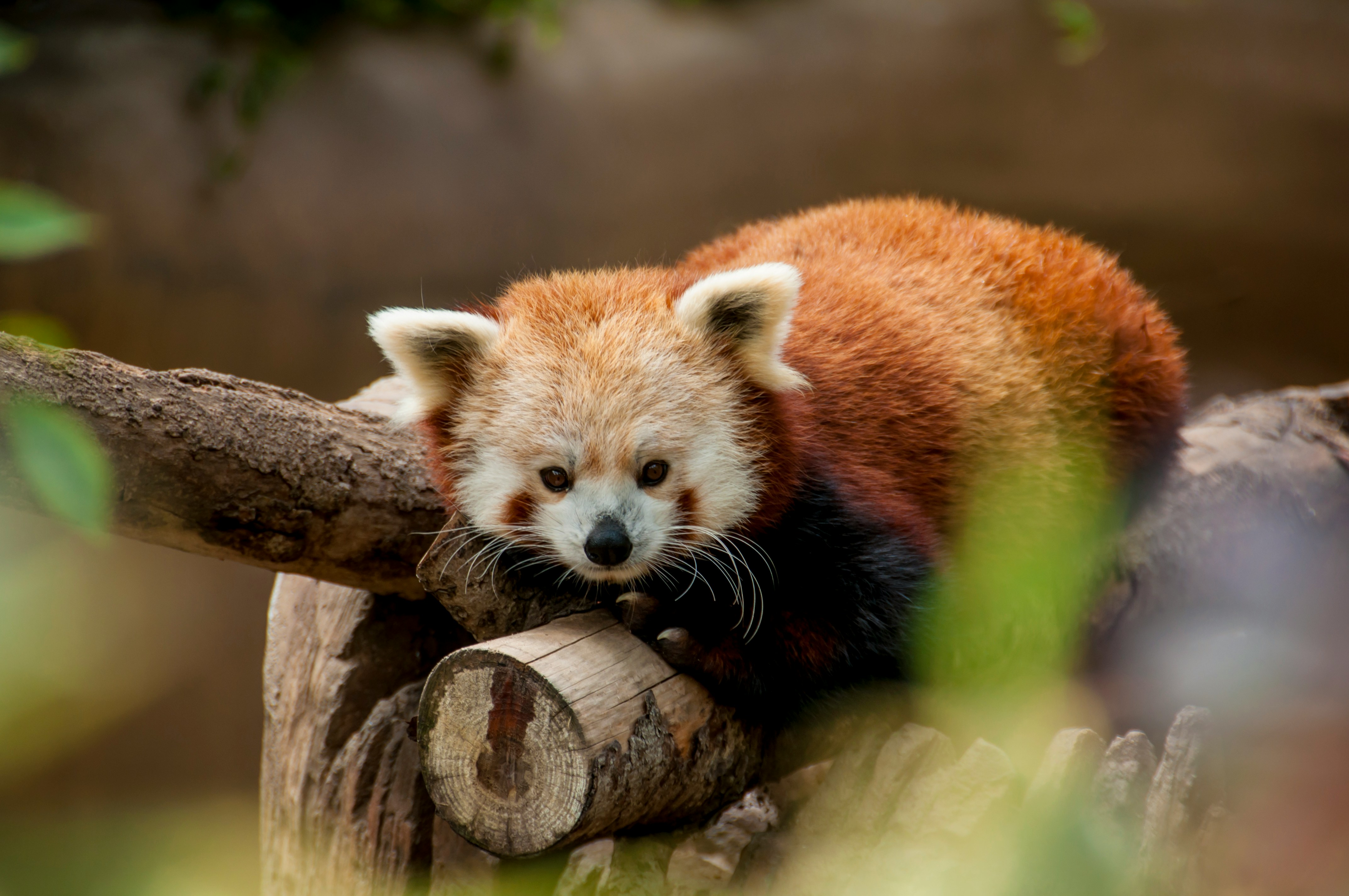
With their curious personalities and their striking rust-coloured fur, long bushy tails and wide, \"masked\" faces, they may look like a combination of a raccoon and a fox, but red pandas are mostly about blending in with their habitat. These rare, endearing mammals, are one of the planet's most endangered species and are found in the Eastern Himalayas and southwestern China, where they endearingly but often underestimated members of the animal kingdom.
Judging by their name, one might think that red pandas are bears. In actuality, they're a part of their own family - the Ailuridae. This makes red pandas evolutionary 'loners'. In addition to trees and moss covered boulders of their habitat, red pandas look right at home in the red moss and white lichen covered Europe and Asia.
Not only do red pandas look right at home in Europe and Asia, but they actually spend most of their time in the trees. As relativiely large mammals that are most confined to the boughs of their habitat, red pandas are actually remarkably adept at climbing. By relying on semi-retractable claws and relatively strong limbs, they are able to traverse the boughs of their habitat with great ease. When they are not busy climbing, red pandas are sleeping, usually curled up in the canopy. These adorable creatures are most active during the crepuscular hours.
Red pandas are classified in a carnivore order that includes the giant panda, but due to the fact that bamboos, their main food source, is low in nutrients, they're actually more herbivore than carnivore. The odd small insect may supplement small amounts of protein, but the bulk of their diets are comprised of fruits, eggs and small insects. Since red pandas have to eat so much more than the average carnivore, they have to rest much more than average.
Little is known about red pandas due to their solitary and elusive qualities. Unfortunately, their state is dire due to serious threats. Habitat loss due to deforestation, poaching, and livestock grazing are some human driven causes for their dwindling numbers. They are also impacted by climate change which threatens their habitats
Both protected areas and facilities are aiding these efforts. Advocacy focused on the education of communities at the local level, establishment of protected pathways for wildlife to roam, and efforts to combat poaching and the illegal wildlife trade
Red pandas, though small and seemingly innocuous, are important in the struggle for biodiversity and the protection of the more obscure and unknown aspects of the world. Their survival is reliant on the more conscious protection of habitats and a greater global awareness.