Polar Bears: Masters of Arctic Survival
Category: Mammals | June 17, 2025
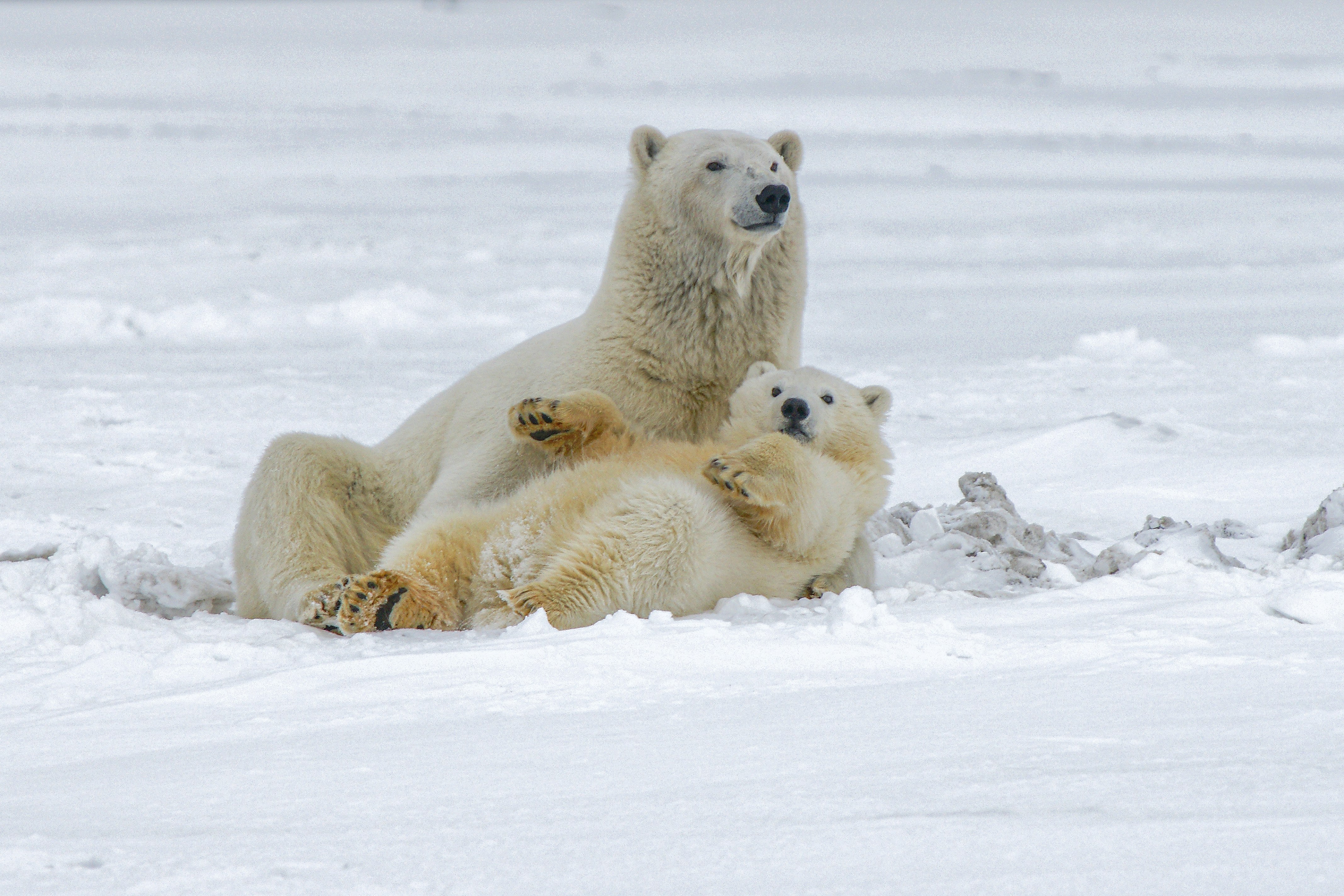
Polar bears are exemplary predators and survivors in the extreme cold and minimal food availability of the vast seas and ice of the Arctic. Their adaptations and hunting skills are unrivaled in the entire region.
Polar bears (Ursus maritimus) are classified as marine mammals and rely on the sea ice ecosystems of the Arctic to hunt their primary food source, seals, as well as other sea mammals. Their limbs and some webbing between their toes allow them to swim great distances to find ice and food. Their fur and fat provide insulation to survive extreme cold.
Polar bears are different from brown bears because brown bears are omnivores that scavenge. Polar bears hunt ringed and bearded seals. Polar bears use a hunting technique known as 'still hunting', where they wait to ambush seals at their breathing holes in the ice.
Polar bears have the most sensitive olfactory sense and are able to smell seals from a distance of one kilometer. Polar bears are excellent hunters. Most hunters on land depend on sight, and those in the water use sound, while polar bears use smell. They are able to hunt in the water through the use of sub-surface swimming to ambush the seals that they are hunting. Polar bears also use the element of surprise to hunt land animals. They are able to stalk land animals in the same way that they hunt ice land seals. They also use the same technique on land as they do in the water to hunt seals by swim and hunt. Because they are land mammals, they are considered land animals to biologists even though they are flow adapted by their extreme cold adaptations.
Alongside their physical skills, polar bears illustrate a high degree of readiness to be independent. Mothers build their dens in snow, and give birth in the winter, Emering from the den almost a year after with new cubs, and the cubs have to learn how to stay alive with the ever-changing environment. For more than 2 years the cubs have to rely on the mother's milk and guidance.
Now polar bears have an even bigger threat to be worried about, climate change. Sea ice forms and melts at a later date than before, and as the Arctic gets warmer from climate change, bear's hunting ranges become fewer and more bear's become stressed. There are several bears that have to swim longer and longer, without food, which poses a serious threat to their health and the health and survivability of their cubs.
While their challenges in life may be numerous, their Arctic story and life resembles endurance and strength. Their story is about more than just life as survival, it crosses over into ruthless climate, stalking predator, and changing environment. Protecting the polar bear is showing that you care for the planet.
🌴 Jungle Chatter
Most popular reactions:
No reactions yet.